Water coming in right now?
In short: if you have water damage in Bothell, shut off the water, stay clear of anything electrical, photograph the damage, and call your insurer. This page is for Bothell, WA homeowners dealing with a leak, flood, burst pipe or sewage backup.
- Shut it offClose the fixture valve or your main water shutoff.
- Stay safeKeep away from wet outlets, cords and appliances.
- Take photosRecord the damage before you move anything.
- Start dryingCall your insurer, then get drying started.
Clean, gray or black water: why it matters
The source of the water decides how careful the cleanup has to be.
| Type | Where it comes from | What it means for you |
|---|---|---|
| Clean water (Category 1) | Broken supply line, leaking faucet, overflowing sink | Can often be dried in place if you act fast. Left sitting, it turns unsanitary. |
| Gray water (Category 2) | Washing machine or dishwasher overflow | Carries soap and residue. Avoid skin contact and clean surfaces after drying. |
| Black water (Category 3) | Sewage backup, outside floodwater | Treat it as contaminated. Keep kids and pets out and leave it to a trained crew. |
The EPA mold guide covers clean water only and says sewage calls for protective equipment and containment. Source: US EPA: Mold remediation guide, Chapter 4.
What can be saved, and what usually goes
Speed decides most of this. Materials dried quickly after a clean-water leak often survive. Materials soaked with sewage or floodwater, or left wet too long, usually don't.
| Material | Clean water, dried fast | Sewage or floodwater |
|---|---|---|
| Carpet pad | Usually replaced | Replaced |
| Carpet | Often saved | Usually replaced |
| Drywall | Often dried in place | Cut out above the water line |
| Insulation | Usually replaced | Replaced |
| Hardwood floors | Sometimes saved with specialty drying | Often replaced |
| Ceiling tiles | Thrown out (EPA) | Thrown out |
Ceiling tile and insulation guidance: US EPA: Mold remediation guide, Chapter 4. Other rows are general restoration practice; the crew's moisture readings decide your case.
How water damage restoration works
Water damage restoration in Bothell usually follows the same five stages, whichever company you call. Knowing them makes it easier to judge whether a crew is doing the job properly. Restoration pros often hold IICRC training, the industry standard for water and mold work.
Inspection
Moisture meters show how far water traveled into floors, walls and cabinets. Water wicks up drywall and runs under flooring, so the wet area is usually bigger than it looks.
Water removal
Pumps and extraction vacuums pull standing water out of floors and carpet. The more water removed now, the faster everything dries.
Drying
Air movers and dehumidifiers run until readings show materials are dry. Ask to see the readings; they're the proof.
Cleaning
Surfaces get cleaned, and sanitized when the water wasn't clean. Soaked carpet pad and insulation usually go.
Repairs
Drywall, baseboards and flooring that couldn't be saved are replaced once the structure is dry.
How you know your home is actually dry
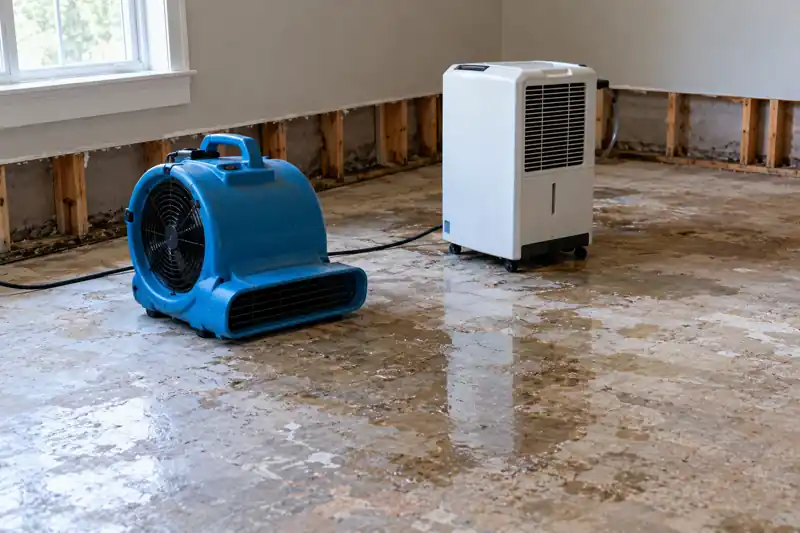
Once the standing water is gone, the real work is drying the structure. A crew sets air movers to push air across wet surfaces and dehumidifiers to pull moisture out of the air, then takes moisture readings until walls, floors and framing read dry.
Rushing this step is how mold and warped floors happen later. The US EPA advises drying wet materials within 24 to 48 hours. Ask to see the readings in writing before any wall is closed up.
What usually causes water damage in Bothell homes
Most calls start with one of these. The cause shapes both the cleanup and the insurance claim.
Burst and frozen pipes
A cold snap can split a pipe in a crawlspace or exterior wall. Washington policies usually cover it if the home was properly heated.
Appliance and supply line leaks
Washing machines, dishwashers, water heaters and toilet supply lines. Sudden failures are usually covered; slow drips usually aren't.
Roof leaks after storms
Fix storm damage fast. Washington's insurance regulator says delaying roof repairs can void coverage for the water that follows.
Rain and creek flooding
Low spots along North Creek flood fairly often. See flood cleanup in Bothell.
Sewer backups
Contaminated water that needs protective gear. See sewage cleanup in Bothell.
Water from firefighting
Hoses leave a lot of water behind. See fire damage restoration in Bothell.
Sources: OIC leaks, water damage and mold, King County hazard plan, Bothell annex.
Signs of hidden water damage
Not every leak announces itself with a puddle. Water travels inside walls, under flooring and across ceilings before you see it. Watch for these:
- Brown or yellow rings on ceilings and walls
- Paint that bubbles or peels, or drywall that feels soft
- Floorboards that cup, buckle or feel spongy
- A musty smell that won't clear, often in basements and closets
- Water dripping or pooling in the crawlspace
- A water bill that jumps without a reason
Found one? Turn off the fixture or main valve if the leak is active, and get the area checked with a moisture meter. Wet you can't see dries slower than wet you can.
Document it for your insurance claim
Your photos are your evidence. Take them before anything is moved or thrown out, and keep taking them as work goes on.
- Wide shots of every affected room, then close-ups of the damage
- The source: the burst pipe, failed hose or roof leak
- Water lines on walls and furniture
- Serial numbers of damaged appliances and electronics
- Every receipt: fans, shop vac, hotel, meals
- Names, dates and notes from each call with your insurer
Washington's Office of the Insurance Commissioner says to report water damage quickly and follow your insurer's instructions for the claim.
Source: WA Office of the Insurance Commissioner: Leaks, water damage and mold.
Questions to ask the restoration company
- Are you registered with Washington L&I? (Then check it on the Verify tool.)
- Do you bill my insurer directly, or do I pay and get reimbursed?
- Will I get a written estimate before work starts?
- How will you show me the materials are dry?
- What will you tear out, and why?
Does Washington insurance cover it?
Usually, if it happened suddenly. Here's what Washington's Office of the Insurance Commissioner says standard home policies tend to do.
Usually covered
- Sudden leaks, like broken plumbing or a failed washing machine
- Burst or frozen pipes in a properly heated home
- Mold that comes from covered water damage
Usually not covered
- Slow, gradual leaks over time
- Sewer backup, unless you bought the add-on
- Flooding from outside, which needs flood insurance
Report the loss quickly and follow your insurer's instructions. You can choose your own contractor. Questions about your policy? The Commissioner's Consumer Advocacy line is 800-562-6900. Sources: OIC leaks and mold, OIC home insurance, OIC flood, OIC claims.
Read the full guide: water damage insurance in WashingtonSudden vs gradual leaks, sewer add-ons, flood policies and how to file a claim.Keep your paperwork, protect your claim
Insurers sometimes deny water damage as a "gradual leak" or "wear and tear," and homeowners worry that hidden damage will surface after the claim is closed. Good records are how you push back.
What to keep from day one
- Photos and video of everything, taken before anything is moved
- The source of the water: the burst pipe, failed hose or roof leak
- Daily moisture readings and the drying log from the crew
- An itemized estimate and final invoice
- A list of damaged items with photos, including anything thrown out
- Notes, names and dates from every call with your insurer
If your claim is denied
Ask your insurer, in writing, for the specific reason and for any engineer's or lab report they relied on. A sudden, accidental leak is usually covered; a slow leak over months usually isn't, so the "sudden vs gradual" label often decides the claim.
You can also call the Washington Office of the Insurance Commissioner's Consumer Advocacy line at 800-562-6900, or hire a licensed public adjuster to work on your side. More in our guide to water damage insurance in Washington.
Sources: WA Office of the Insurance Commissioner: Leaks, water damage and mold; WA Office of the Insurance Commissioner: Filing a homeowner insurance claim; WA Office of the Insurance Commissioner: File a complaint.
Bothell's water risks, by the numbers
The Sammamish River runs through Bothell, fed partly by North Creek and Swamp Creek. Low spots along North Creek flood fairly often.
For street or drainage flooding, call City of Bothell Public Works at 425-488-0118, option 1. Sources: King County hazard plan, Bothell annex, King County Sammamish watershed, Bothell sewer standards, Bothell rain and flooding, WA OFM.
Areas we connect
We connect homeowners who need water damage restoration in Bothell ZIP codes 98011, 98012 and 98021, on both the King County and Snohomish County sides of the city. That includes downtown Bothell, Canyon Park, North Creek and Thrasher's Corner.
If you're outside these ZIP codes, your call may not connect to a company.
How the call works
You call and describe what happened. We connect you with a participating restoration company. They inspect, explain the work and set their own price. You're never obligated to hire anyone.
Questions Bothell homeowners ask
Are you a restoration company?
No. We're an independent referral service. When you call, we connect you with a participating restoration company that works in Bothell. That company inspects the damage, gives you its own estimate and does the work. Participating companies pay us for the referral, so the call costs you nothing.
What should I do first after water damage?
Shut off the water at the fixture or the main valve, stay clear of wet outlets and appliances, and take photos before you move anything. Then report it to your insurer and get drying started. The US EPA advises drying wet materials within 24 to 48 hours to help prevent mold.
How long does water damage restoration take?
There's no single answer. A small clean-water leak dries faster than a soaked basement, and drywall or flooring repairs add time after drying. A good crew takes moisture readings on each visit and tells you when materials are actually dry. Ask for the expected timeline in writing before work starts.
What does it cost to fix water damage?
It depends on how much area got wet, whether the water was clean or contaminated, what materials soaked through and how much has to be replaced. We don't set prices; the company you speak with does. Ask for a written estimate and check what your policy covers before work begins.
How fast can mold grow after water damage?
Faster than most people expect. The US EPA's guidance is to dry water-damaged materials within 24 to 48 hours to help prevent mold growth. Wet ceiling tiles and insulation are usually thrown out rather than dried, because they hold moisture and are hard to clean properly.
Does homeowners insurance in Washington cover water damage?
Often, but the cause matters. Washington's Office of the Insurance Commissioner says policies usually cover sudden, accidental leaks, like a failed washing machine or a burst pipe in a heated home. Slow leaks that build up over time usually aren't covered. Your own policy has the final word.
Is sewer backup covered by a standard home policy?
Usually not. Washington's Office of the Insurance Commissioner lists sewer backup and sump pump overflow as an optional add-on you buy separately. If you aren't sure whether your policy has it, call your agent and ask now, before the next heavy rain, rather than after a backup.
Who is responsible for a sewer backup in Bothell?
Under Bothell Municipal Code 18.03.090, the city's responsibility ends where your side sewer connects to the public main. The pipe from there to your house is generally yours. The city sewer utility serves only about half of Bothell, so check whether a district serves your address.
Can I choose my own restoration company?
Yes. Washington's Office of the Insurance Commissioner says you can choose your own contractor, even if your insurer suggests one. Before you sign anything, look the company up on the L&I Verify tool and read any assignment of benefits form carefully so you know what you're agreeing to.
Can I get help at night or on weekends?
You can call any time, but we won't promise a crew at every hour. Availability depends on the time of day, and fewer companies take calls late at night and on weekends. If nobody is available, work through the first-hour steps on this page and try again.
How do I know my home is actually dry?
Ask for moisture readings. A crew uses a moisture meter on walls, floors and framing and keeps measuring until the numbers read dry, usually matching unaffected parts of the home. Drying is finished when the readings say so, not when surfaces feel dry. Ask to see them in writing before walls are closed up.
What can I keep after water damage, and what has to go?
It depends on the water and how long things stayed wet. Materials dried quickly after a clean-water leak often survive. Wet insulation and ceiling tiles are usually thrown out, and porous items soaked in sewage or floodwater generally can't be saved. Photograph everything before it goes, since your insurer may want proof.
What should I photograph first for my insurance claim?
Take wide shots of each affected room before anything is moved, then close-ups of the damage and the source, like the burst pipe or failed hose. Photograph water lines on walls and furniture, plus appliance serial numbers. Keep taking photos as the work goes on, and keep every receipt.
My insurance claim was denied. What are my options?
Ask your insurer in writing for the specific reason and any report it relied on. You can call the Washington Insurance Commissioner's Consumer Advocacy line at 800-562-6900, or hire a licensed public adjuster. Slow leaks are often denied as gradual, so records showing the damage was sudden can matter.
Is it safe to stay in the house after water damage?
It depends on what got wet. Stay out of rooms with standing water near outlets or appliances, and if water reached your electrical panel, keep away and call a licensed electrician. Avoid areas with sewage or floodwater, especially with children and pets. When unsure, wait for a professional to check.
Can clean water turn into a bigger problem?
Yes. Clean water from a supply line is the easiest to deal with, but left sitting it can become unsanitary, and wet materials can start growing mold. The US EPA advises drying wet materials within 24 to 48 hours. That is why the first day matters most.
Water damage in Bothell? Call now.
Independent referral service. Participating companies pay us for referrals. Calls may be recorded.